Who Am I and How Did I Get Here
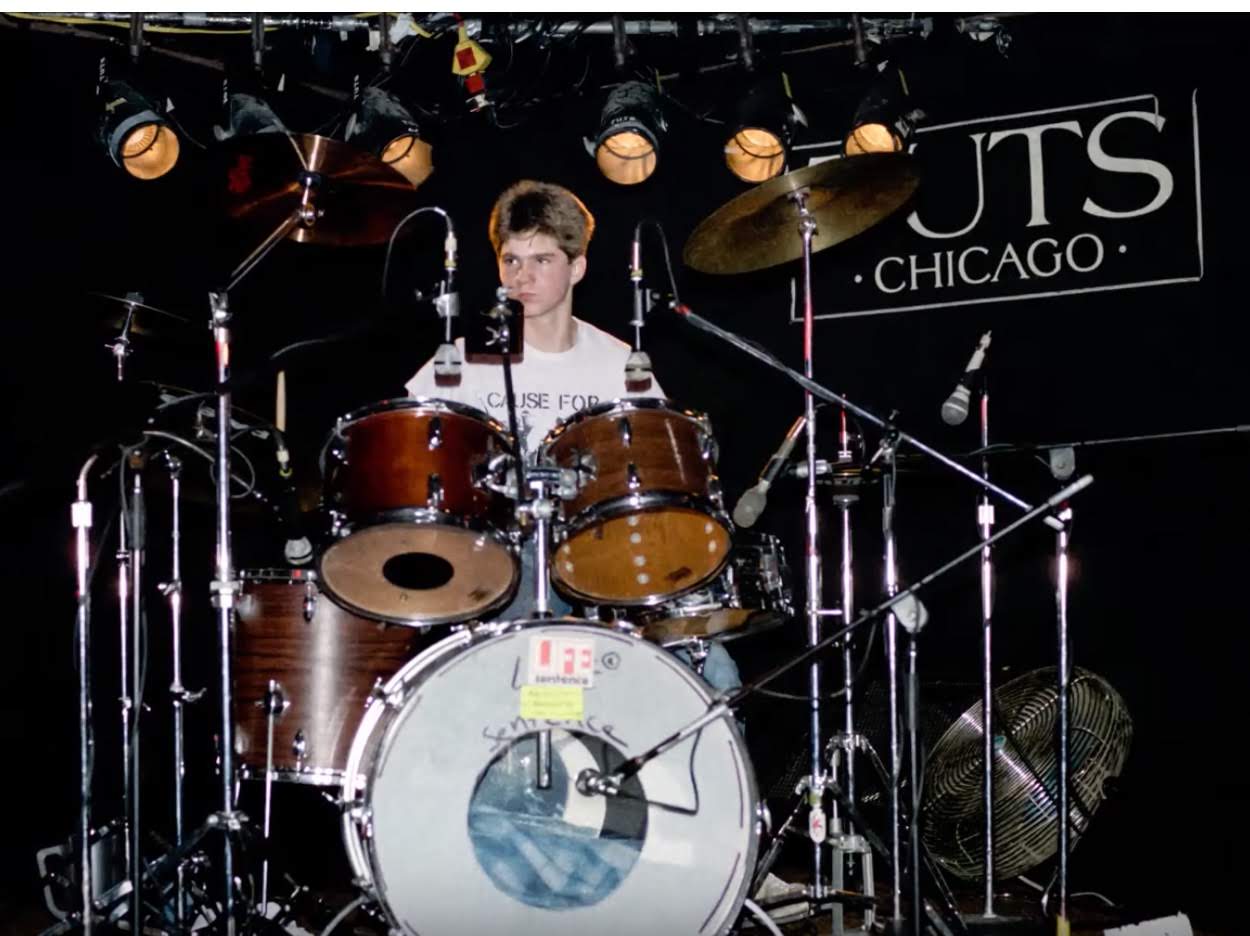
My first passion in life was playing the drums, which began when I was nine years old, during a tumultuous time in my life. My family moved from rural Connecticut to inner city Chicago in the summer of 1977 so my Mom could attend graduate school in sociology at the University of Chicago. Overnight, I went from being a country kid to a city kid, and I learned quickly to adapt to the harsh realities of the city. Filled with anxiety about my new environment and situation, I was a hyper-nervous kid. Banging on things and surfaces became an outlet for me. I entered my new school in Chicago for the 4th grade when students chose an instrument to study. I chose percussion, and soon I was learning how to play.
Playing the drums helped me release nervous energy and perhaps tapped into an innate sense of rhythm and musicality. Having older brothers and sisters, I was already interested in popular rock music on the radio, and before long started dreaming of a glamorous life in music. I gradually acquired more percussion equipment until I had, more or less, a full drum set that I could start playing in bands in the 8th grade. Over the years, I also picked up a guitar and bass and tried to expand my horizons to composition and songwriting.
Highly focused, I played in bands semi-professionally with older bandmates in high school. I wanted to make a career of it, so I attended Berklee College of Music in Boston for my freshman year. I quickly realized there were many incredible musicians (much better than I) in the world who were just scraping by, doing whatever they could to make a living and pay the bills. Disillusioned, I limped back to Chicago and enrolled in liberal arts programs, first at UIC in Chicago and later at the University of Iowa. Although I continued to pursue my passion for music, composing, and recording, I also gave in to my social science interests and DNA inherited from my mother. I took many interesting courses in sociology and anthropology. But I had no idea how I would make a living. And then everything changed.
Art Meets Technology
Shortly after arriving at the University of Iowa (circa 1988), a fellow musician friend, whom I met through band circles in Iowa City, had an Apple Macintosh Plus computer. I was interested in getting a personal computer, but my resources were quite limited. At the time, I was trying to compose and record on a cheap 4-track cassette tape recorder. The recorder was expensive (for me), and it produced poor quality audio. My musician friend mentioned MIDI (Musical Instrument Digital Interface), the relatively new digital protocol that synthesizers, drum machines, and computers use to communicate and record and playback music tracks. He educated me on the idea of a MIDI sequencer program that could be run on a personal computer. Coupled with MIDI instruments, one could compose and record music, not with raw audio, but with a technology that greatly increased the quality and manipulability of the production. The prospect of this flexibility was the incentive I needed to acquire this gear. There was just one problem: I needed money!
My same musician friend with the Macintosh Plus, also told me that our computer center at The University of Iowa would lend me the money to buy a computer! What? Someone would lend me money?! Where do I sign up?
I went down to the Weeg computer center, splurged, and picked out a Macintosh computer. I worked part-time and went to school part-time to make ends meet, so I had a little money, but I also started cyphoning my tuition money towards buying gear: A MIDI interface for the computer, some synthesizers, and a drum machine. I pirated some software here and there, and soon I was up and running.
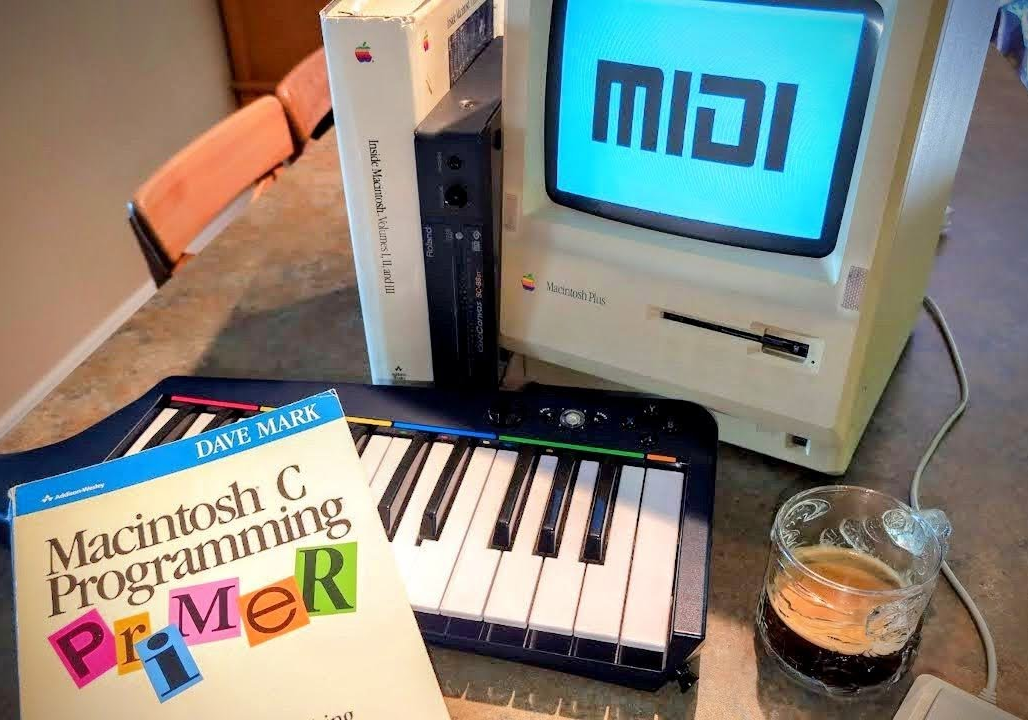
You might think this story is about me becoming a successful musician and composer, but it's not. All of this was a gateway to science and computing. You see, before long, I realized the Macintosh was the ultimate instrument. I could record and play music on it. But I could also write my papers on it, make art with it, play games, etc. My life started to center around it. What did I do without this thing? Eventually, I purchased a 30MB hard drive ($500!), added more memory, and continued upgrading.
And then something really strange happened. I was flipping through a computer mail-order catalog one day and saw an advertisement for a driver toolkit that would let you write custom MIDI programs in BASIC. Did I have any experience with BASIC? In a word, no. I had heard of it, knowing a nerdy friend of two in high school who did early programming, but I was hardly a math and science kid - I was an artist.
Well, I bought the toolkit and started studying the example programs, staring at them, trying to make sense of them (I would repeat this process many times over the next 20 years, especially in mathematics and machine learning). Remember, there was no YouTube or Internet. There was the school bookstore, which had a small section on computers, and certainly the use of personal computers was taking off, probably more so than I realized.
Eventually, I started figuring it out. I wrote a few MIDI programs. I gravitated towards other computing resources on campus. I was driven. I met more people who influenced and educated me. One influential person got me a job at the computer center where I had originally bought my computer. I started buying more computer programming books, usually ones that were above my head. Eventually, I switched my major to computer science. I was so obsessed. What really struck me about programming was how fast time went by when immersed in it. I would find myself up in the middle of the night programming, working on my applications (and occasionally homework). I had never engaged in anything remotely academic before that was anything near this compelling and immersive.
After MIDI, the Macintosh itself was my next challenge. The Macintosh had a GUI that required a lot of extra know-how and programming. Word around campus was that it was not for the faint of heart, impossible really. But to me, CLIs (command line interfaces, e.g., DOS) were dull and arcane. Interacting with windows, menus, buttons, dialogs, sliders, etc., was magic to me. The GUI was the gateway that got me into computers, so I was certain I could and would tackle this next hurdle. And indeed I did. I found a book or two, studied them cover-to-cover, and built applications with them relentlessly.
Pretty soon, employment opportunities presented themselves. Word got around campus that I could do this work at a time when academics were embracing multimedia computing. I was way beyond the kids in my computer science class, and my professors and T.A.s were clearly irritated by my show-off assignment submissions. Before long, I drifted out of school into lucrative full-time employment.
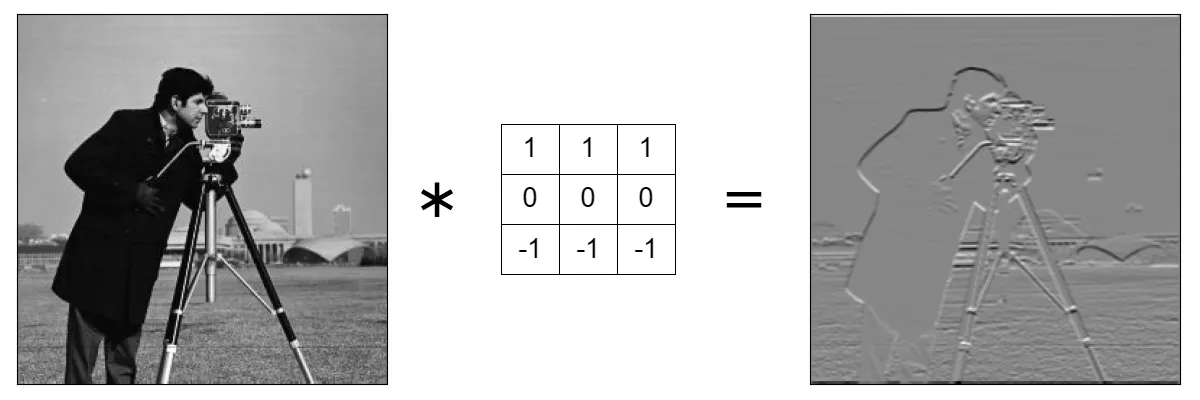
And then came computer graphics, image, and signal processing. I backed into much deeper mathematics through a fascination with how to manipulate and transform image and audio signals. The Fourier transform, convolutions, and nonlinear filters. Then, image warping and texture mapping algorithms, eventually leading to early computer vision algorithms in the early 2000s.
I should mention that this was only my first chapter with Apple Computer. In the not-too-distant future, I went from being a sought-after Macintosh programmer to not being able to be arrested. By the mid-1990s, Apple failed as a company, and the demand for Macintosh programmers dropped off precipitously in favor of Microsoft Windows programmers. Eventually, Steve Jobs came in and saved the company. But by the time the early versions of OS X arrived in the early 2000s, I had long moved on to Linux and Java. I eventually came back to the Mac as a Unix engineer, but I never took allegiance to a single platform or language ever again.
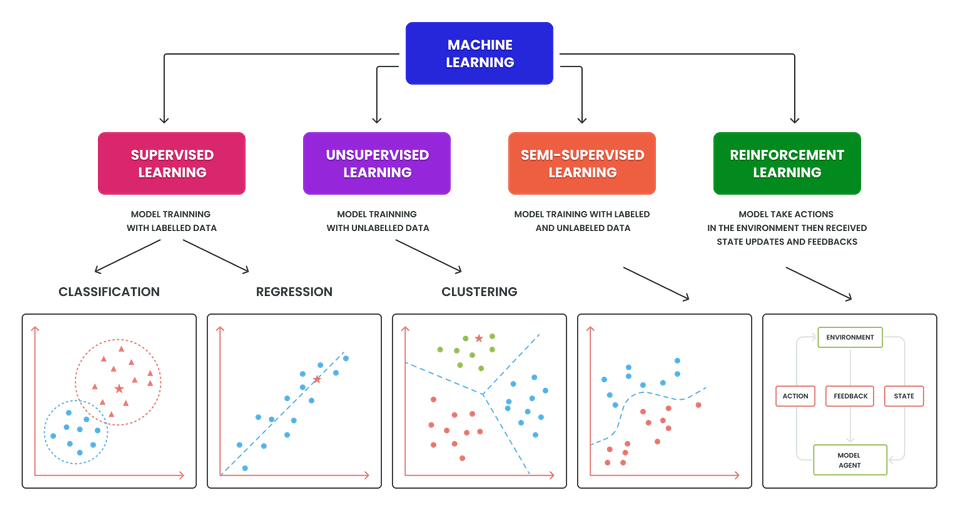
My biggest chapter in technology has been Machine Learning, now referred to (again) as Artifical Intelligence (AI). I stumbled into a University of Washington technology commercialization startup (the second of many startups in my career) in 1996, which took me in a new direction. There, I met many influential people who introduced me to new concepts, ideas, and technologies. The Internet was just starting to take hold. Data science and pattern recognition technologies were emerging to deal with the proliferation of information and data on the Internet. As informational sites and e-commerce applications sprouted like weeds, findability was quickly becoming a problem. Pattern discovery, prediction, and forecasting powered by supervised and unsupervised learning were quickly emerging technologies. And I was facinated by it. Now, in the age of AI, I joke that I thought these technologies were huge 20 years ago. I was not prescient. It was just clear to me that data was going to continue to accumulate and multiply. If we ever expected to find anything and make use of it, we were going to need increasingly powerful pattern-recognition technologies.
I co-founded a number of technology startups between 1998 and and 2015. All backed by venture capital, I found ways to apply data plus machine learning to solve or addreess a variety of business and consumer problems. My path took me though online advertising, e-commerce, travel, medical informatics, and consumer video creation and social sharing. My co-founders and I managed to land these planes, sometimes spectacularly right down the middle of the runnway and sometimes a mile short of the runnway in a grassy field. All were incredible learning experiences and made me want to keep trying, each time with new learnings and perspectives.
Most recently, I was a partner at a startup studio (incubator/accelerator) called Madrona Venture Labs. We were a small group of experienced entrepreneurs helping incubate ideas (ours and other founders) with the goal of systematically putting ideas through a rigorous process that would elevate and fund the best and most promising concepts. For the first time, I was developing my craft of building startups not serially, but in parallel. This accelerated my learning dramatically. Suddenly, I started seeing the forest through the trees much more clearly. I also started teaching entrepreneurship to undergrad/graduate students, which also helpped me distill patterns and lessons I have accumulated over the last 30 years.
To this day, I still do all of these creative activities on my laptop and iPad. Music, Art, Imaging, Programming/Engineering, 3D modeling and printing, AI, etc. It is absolutely incrediable how far the technology has come - and it keeps coming. Forty years later, it is still the ultimate instrument.
Here's a podcast I did with a friend talking about some of this... Xyonix - AI in Music Generation: Interview With Jay Bartot